
Fritz addresses ethics of AI in Graves Lecture
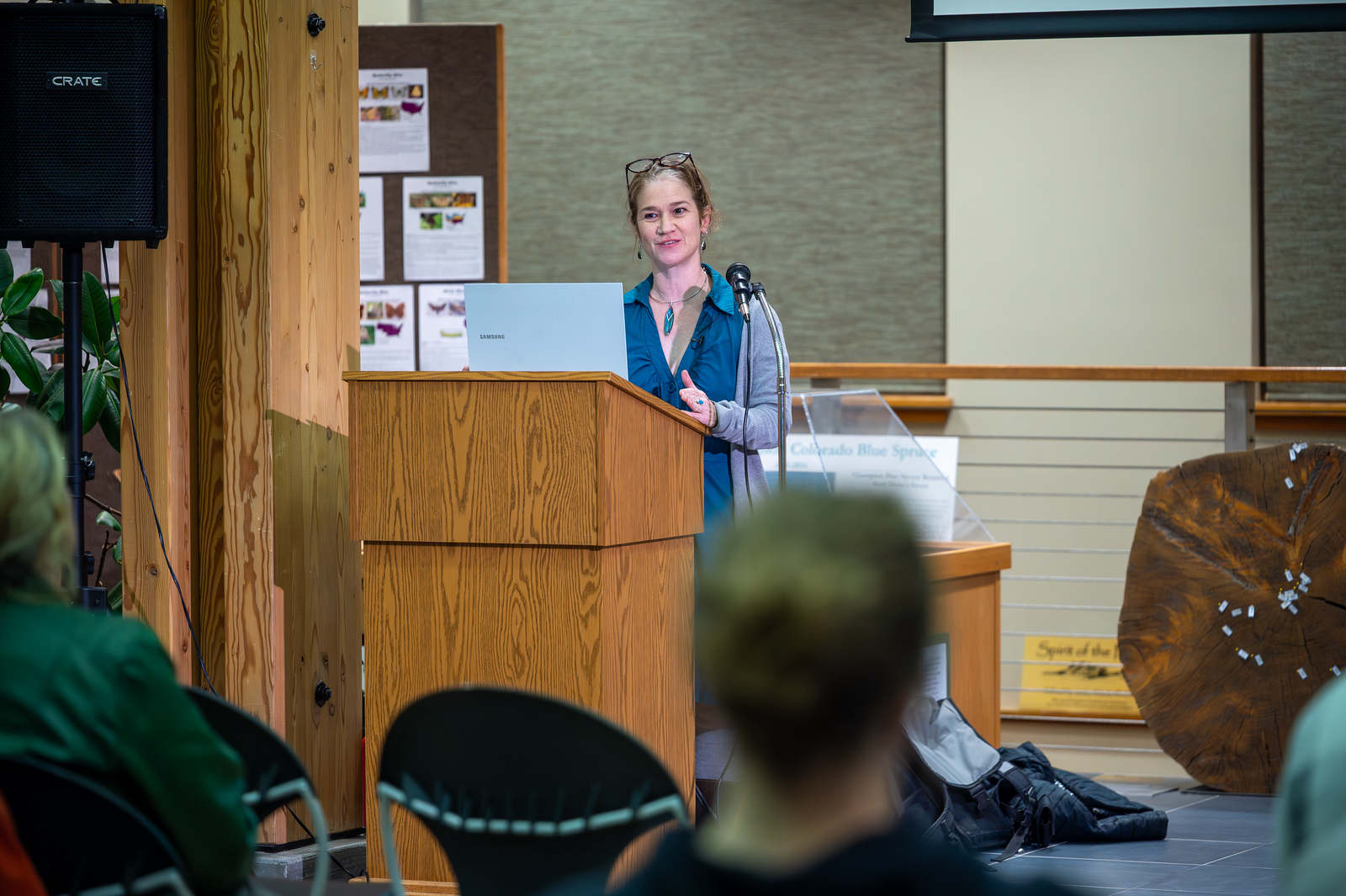
CHADRON – The final Graves Lecture Series of the fall semester concluded Nov. 5 at the Sandoz Center with Chadron State College Associate Professor of Philosophy and Department Chair Dr. Allison Fritz sharing insights about the ethical implications of Artificial Intelligence (AI).
Fritz opposes using AI for daily tasks and encouraged the audience to reduce unwarranted use by adjusting settings on different online platforms. She said she recognizes that AI technology can be beneficial in certain areas of the world, such as medical research and climate prediction, but avoids using it personally.
She began the discussion by explaining basic principles of ethics, then moved into the different issues she has observed with the development and widespread use of AI.
One of the biggest concerns for Fritz is privacy violations. Problems arise when images of people on public streets are captured by video cameras and then used in AI training models, without consent, she said.
“You have a right to your own data because it's something that you have produced and when someone uses it without asking you, that is a violation of your autonomy,” she said.
Fritz explained that AI learns from existing human data, inheriting its biases and making associations based on patterns, even when irrelevant to the conversation. She provided examples of how AI’s bias can perpetuate racism and prejudice, negatively affecting law enforcement, the medical field, and other areas in society.
Next, Fritz highlighted the environmental impact of AI. When looking at environmental effects, she said it is important to consider the actual development of AI models themselves, the development of the AI data centers, and the volume of AI in use.
“There are massive energy requirements for computational power needed to train these generative AI models during the development stage. And in particular, what's problematic, is they include really wild fluctuations in energy,” Fritz said.
Additionally, she said the machines require large amounts of copper and rare earth minerals.
“You end up having highly vulnerable communities where people are brought there to mine, or perhaps there are no other sources of income in the area, and then they are doing all of this exceedingly hazardous mining with no environmental oversight, and live very short lives because of it,” she said. “There's lots of mining disasters and things like that, and we just kind of turn a blind eye because we're not the ones doing it.”
Other environmental impacts brought up in the discussion included excessive water usage, electronic waste, air pollution, and climate change.
Before concluding the lecture, Fritz addressed social aspects that can be lost due to the deprivation of human interaction.
“You now talk to robots more and we're losing that human connection, which is key to empathy, which is absolutely key to being good. I think emotions are pretty key to being moral,” she said.
Category: Campus Events, Campus News, Graves Lecture Series